
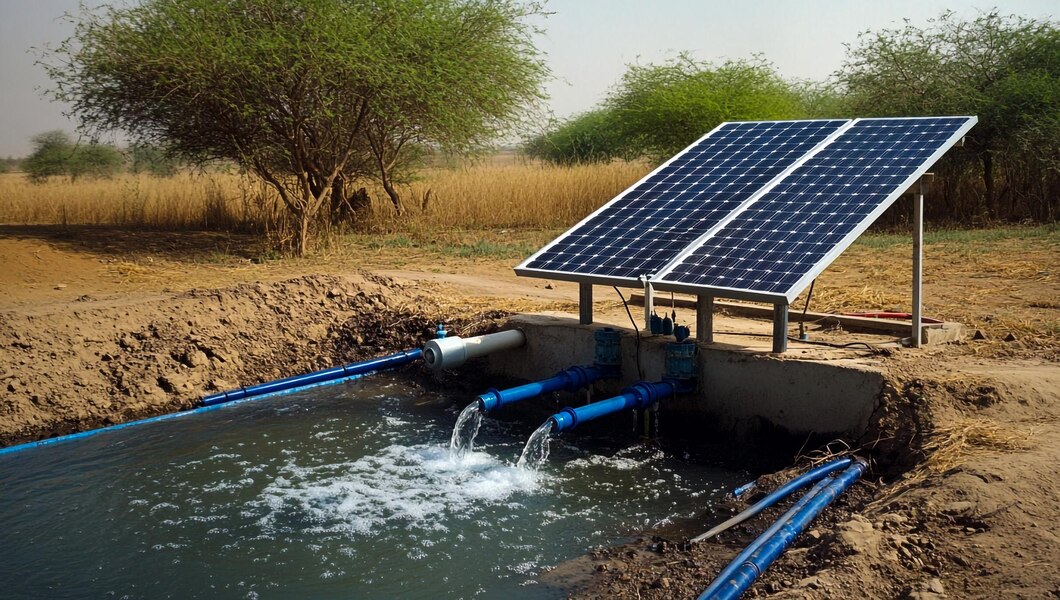
Solar Water Pump
A Solar Water Pump is a renewable energy-powered system designed to extract water from sources such as wells, rivers, or reservoirs using solar energy. These pumps operate independently of the grid, making them an ideal solution for irrigation, livestock watering, and drinking water supply in areas without reliable electricity access. By harnessing solar power, solar water pumps offer a sustainable and cost-effective alternative to traditional diesel or electric pumps.
How Solar Water Pumps Work
Solar Energy Collection:
Solar panels absorb sunlight and convert it into direct current (DC) electricity.
Pump Operation:
The generated electricity powers a motor that drives the water pump, lifting water to the surface or moving it through pipelines.
Water Storage (Optional):
Excess water pumped during peak sunlight hours can be stored in tanks for use during cloudy periods or nighttime.
Controller Integration:
A solar pump controller optimizes performance by regulating voltage and protecting the system from overloading or dry runs.
Key Components of a Solar Water Pump
Solar Panels:
- Capture sunlight and generate electricity to power the pump.
- Typically made of monocrystalline or polycrystalline silicon for high efficiency.
Pump:
- Two main types are used:
- Surface Pumps: Extract water from shallow sources.
- Submersible Pumps: Suitable for deep wells and boreholes.
Motor:
- Converts electrical energy into mechanical energy to operate the pump.
Solar Pump Controller:
- Regulates the power flow from the solar panels to the pump.
- Protects the system from issues like overvoltage, under-voltage, or dry running.
Piping and Valves:
- Facilitate the movement of water from the source to the desired location.
Water Storage Tank (Optional):
- Stores water for use during non-sunny hours or times of high demand.
Benefits of Solar Water Pumps
Eco-Friendly Solution:
- Solar water pumps rely entirely on renewable solar energy, reducing carbon emissions and environmental impact.
Cost-Effective:
- Eliminates fuel costs associated with diesel pumps and reduces dependence on grid electricity.
Reliable in Remote Areas:
- Ideal for off-grid locations, providing a dependable water supply in rural or isolated regions.
Low Operating and Maintenance Costs:
- Minimal maintenance requirements and no recurring energy expenses make them a long-term cost-effective solution.
Scalable and Versatile:
- Suitable for small-scale agricultural use as well as large-scale irrigation systems.
Energy Independence:
- Users are not affected by power outages or rising fuel prices.
Applications of Solar Water Pumps
Agricultural Irrigation:
- Provide a sustainable water source for farms, improving crop yields and reducing irrigation costs.
Livestock Watering:
- Ensure a consistent water supply for livestock in remote grazing areas.
Drinking Water Supply:
- Deliver clean water to rural communities without access to the grid.
Aquaculture:
- Used for fish farming by maintaining water levels and circulation.
Industrial and Commercial Use:
- Support water needs for small industries, commercial establishments, or construction sites.
Types of Solar Water Pumps
Surface Solar Pumps:
- Designed for shallow water sources, such as ponds or rivers.
- Suitable for pumping water to nearby locations.
Submersible Solar Pumps:
- Ideal for deep wells and boreholes, capable of lifting water from significant depths.
DC Solar Pumps:
- Operate directly on the DC electricity generated by solar panels.
AC Solar Pumps:
- Use an inverter to convert DC electricity to AC, compatible with conventional pump motors.
Limitations of Solar Water Pumps
Weather Dependence:
- Pump performance is affected by sunlight availability, requiring backup storage or auxiliary power for cloudy days.
Higher Initial Investment:
- Solar water pumps have a higher upfront cost compared to traditional pumps, although operational savings offset this over time.
Storage Limitations:
- Without a water storage solution, the system's effectiveness may be limited during low-sunlight periods.
Site-Specific Feasibility:
- Installation requires adequate sunlight exposure and compatibility with water source conditions.
Factors to Consider When Installing a Solar Water Pump
Water Source Depth:
- Determine the depth and type of water source to select the appropriate pump.
Irrigation or Watering Needs:
- Assess daily water requirements to size the system correctly.
Solar Potential:
- Ensure the site receives sufficient sunlight for optimal system performance.
System Components:
- Choose durable and efficient components, including panels, pumps, and controllers.
Budget and Incentives:
- Consider the initial cost and check for government subsidies or incentives for solar installations.
Maintenance Requirements:
- Ensure access to skilled technicians for periodic maintenance.
Conclusion
Solar water pumps are an innovative and sustainable solution for meeting water needs in agricultural, residential, and commercial settings. They offer an eco-friendly alternative to traditional pumps, reducing operating costs and environmental impact. With proper system design and installation, solar water pumps provide a reliable, efficient, and cost-effective way to ensure water availability, particularly in remote or off-grid locations. By adopting solar water pump technology, users can contribute to sustainable water management while benefiting from long-term savings and energy independence.