
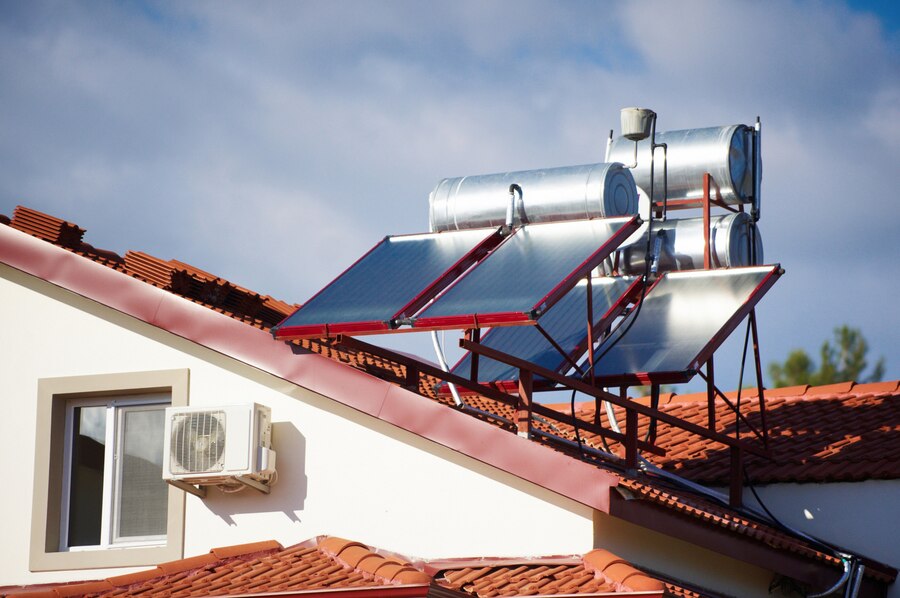
Solar Water Heater
A Solar Water Heater (SWH) is an energy-efficient system that harnesses solar energy to heat water for residential, commercial, or industrial use. By utilizing sunlight as a renewable energy source, solar water heaters significantly reduce electricity or fuel consumption, making them a sustainable and cost-effective alternative to conventional water heating methods.
How Solar Water Heaters Work
Solar Energy Collection:
- Solar collectors absorb sunlight and convert it into heat.
Heat Transfer:
- The heat is transferred to water or a heat transfer fluid (e.g., antifreeze) within the system.
Water Heating and Storage:
- The heated water is stored in an insulated tank, ready for use.
Circulation System:
- In active systems, a pump circulates water or fluid between the collector and storage tank. Passive systems rely on natural convection.
Key Components of a Solar Water Heater
Solar Collectors:
- Flat-Plate Collectors: Absorb sunlight through a flat, glazed surface and are suitable for mild climates.
- Evacuated Tube Collectors: Use vacuum-sealed tubes for higher efficiency in colder climates.
- Integral Collector-Storage Systems: Combine collection and storage in a single unit for compact applications.
Storage Tank:
- An insulated tank stores the heated water, maintaining its temperature for extended periods.
Circulation System:
- Active Systems: Use electric pumps to circulate water or heat transfer fluid.
- Passive Systems: Operate without pumps, relying on gravity or convection.
Heat Exchanger (Optional):
- Transfers heat from the fluid to water in indirect systems, preventing freezing or contamination.
Controller and Sensors:
- Regulate system operation, ensuring optimal performance and safety.
Piping and Valves:
- Facilitate water flow and temperature regulation throughout the system.
Types of Solar Water Heaters
Active Systems:
- Direct Circulation Systems: Pump water directly through the collectors to the storage tank.
- Indirect Circulation Systems: Use a heat transfer fluid to carry heat to the water.
Passive Systems:
- Thermosiphon Systems: Rely on natural convection to move water between the collector and storage tank.
- Integral Collector-Storage Systems: Combine heating and storage in a single unit without pumps.
Benefits of Solar Water Heaters
Energy Savings:
- Reduce reliance on electricity or fossil fuels for water heating, lowering utility bills.
Eco-Friendly:
- Use renewable solar energy, reducing greenhouse gas emissions.
Cost-Effective:
- While the upfront cost is higher, long-term savings offset the investment.
Reliable and Durable:
- High-quality systems last 15–20 years with minimal maintenance.
Scalability:
- Suitable for small households as well as large commercial or industrial applications.
Independence from Power Outages:
- Operate independently of the grid in sunny regions, ensuring a continuous hot water supply.
Applications of Solar Water Heaters
Residential Use:
- Provides hot water for bathing, cooking, and cleaning in households.
Commercial Use:
- Supports hot water needs in hotels, hospitals, laundries, and restaurants.
Industrial Use:
- Delivers process heat for industries like food processing, textile, and chemical manufacturing.
Swimming Pools:
- Efficiently heats pool water using solar energy.
Limitations of Solar Water Heaters
Weather Dependency:
- Efficiency is reduced during cloudy days or in regions with limited sunlight.
Higher Initial Cost:
- The upfront investment is higher compared to traditional water heaters, although long-term savings compensate for this.
Space Requirement:
- Solar collectors and storage tanks require sufficient installation space.
Maintenance Needs:
- Periodic cleaning of collectors and inspection of components are necessary for optimal performance.
Site-Specific Feasibility:
- Effectiveness depends on the location, orientation, and shading of the installation area.
Factors to Consider Before Installing a Solar Water Heater
Hot Water Demand:
- Assess daily hot water requirements to determine the system size and capacity.
Available Sunlight:
- Evaluate the site’s solar potential to ensure efficient performance.
System Type:
- Choose between active or passive systems based on climate, budget, and energy needs.
Installation Area:
- Ensure sufficient roof or ground space with optimal orientation and tilt for solar collectors.
Budget and Incentives:
- Consider initial costs and explore government incentives, rebates, or tax credits for solar installations.
Water Quality:
- Hard water may require additional measures, such as water softeners or descaling maintenance.
Conclusion
Solar water heaters are a sustainable and efficient solution for meeting hot water needs across residential, commercial, and industrial settings. By leveraging renewable solar energy, they reduce energy costs, minimize environmental impact, and provide long-term value. With advancements in technology, modern solar water heaters offer improved efficiency, durability, and reliability. Investing in a solar water heating system is a smart step toward energy independence and a greener future.